
Capsules - 2025 Catchup #2
Catching up with some notable 2025 films

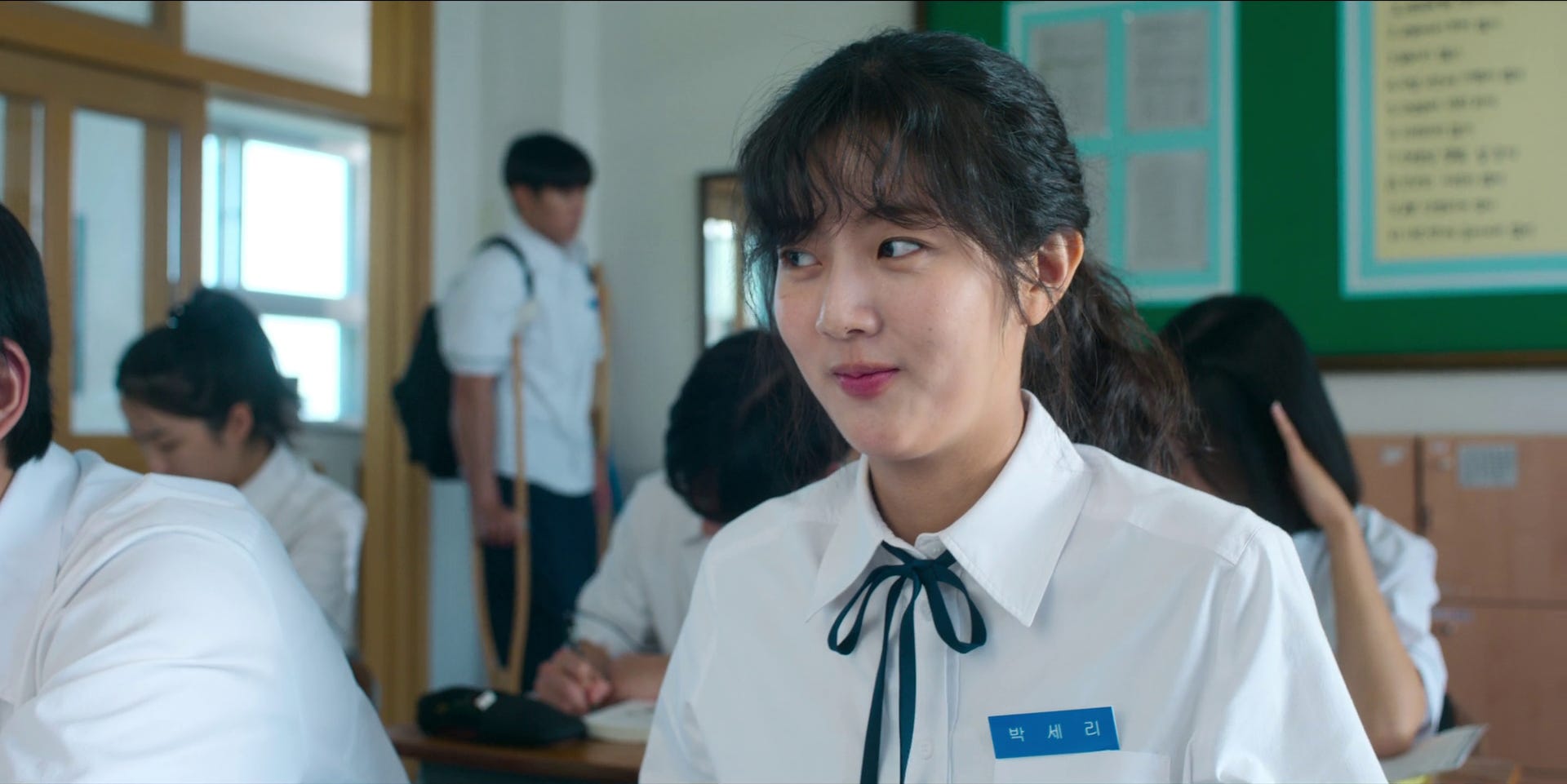
Love Untangled (Namkoong Sun, South Korea)
The premise is very tired and yet somehow still charming - a teenage girl with hopelessly curly/frizzy hair has a crush on a boy and she hopes that by straightening her hair she’ll be able to win him over. She’s surrounded by a supportive group of friends who support her various schemes. Of course, everything is upended when a new transfer student joins the class. Watching this film I was reminded that once upon a time films like these were released in US theaters (films like She’s All That, etc.), but now seem relegated almost exclusively to the realm of streaming (To All The Boys I’ve Loved Before in the film world, The Summer I Turned Pretty for TV). Let’s set aside quality for a second. Perhaps one of the reasons why young people have abandoned movie theaters for the most part is that their stories are no longer found there. Those stories have moved elsewhere, to their laptops or tablets (phones in the worst cases), away from the collective experience of a movie theater. Away from cinema. If those images existed on the big screen perhaps they would return, and perhaps something new could emerge. After all, there’s something reassuring in seeing your own struggles dramatized on the big screen, in the best of cases, even dignified. In the case of Love Untangled there’s a wonderful stretch late in the film where we can see the beauty of the heroine’s actions, the sacrifice that is staged by the director, and it carries real weight. The film moves from the generic to the specific in this one sequence, where the tears of the male character completely rupture the fantasy that had been built up, and the very real world outside the contours of the narrative intrudes harshly. The film’s mission in its final moments is to bring back that fantasy. Which is disappointing, but understandable. Life is disappointing enough.
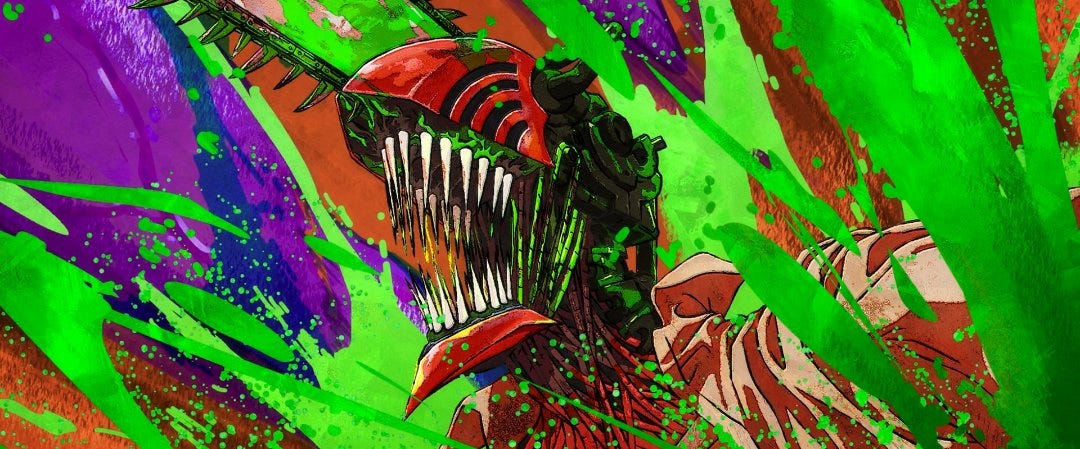
Chainsaw Man - The Movie: Reze Arc (Tatsuya Yoshihara, Japan)
Let’s say quickly that the three biggest shounen battle shows of the last few years are (not counting One Piece, that one is its own thing) Jujutsu Kaisen, Demon Slayer and Chainsaw Man. Out of these three the only one that strikes me as particularly interesting is Chainsaw Man. The only thing that the other two have going for them are their battle scenes, which have plenty of exciting things going on but are ultimately rather dull. Chainsaw Man seems closer to the Sex and Death 101 concerns of FLCL and Neon Genesis Evangelion, where the terror of feeling up a girl for the first time and working through your feelings about the act are just as important as the battle against the Sword Devil. Chainsaw Man is also emblematic of the new way of adapting these shounen properties. It’s no longer smart business to start an adaptation and keep it going forever and do fillers if you catch up (see Naruto). With shows like My Hero Academia these properties began to take seasonal breaks, both to help pacing and also to make sure that the manga was suitably ahead enough of the anime to avoid adaptation issues (once again see Naruto, which aired over a year and a half of filler episodes before relaunching with Naruto: Shippūden). Season 1 of Chainsaw Man, which lasted only 12 episodes, adapted maybe about a third of Part 1 of the manga. Now three years later comes Reze Arc, a remarkably self-contained arc that has Denji meet a cute girl named Reze which causes him to be confused (because he loves Makima, after all, and only her). The first half of the film is all hormones, doubts and insecurities. Reze touches his arm, she laughs at his jokes… Denji compares her to Makima and to how he feels about the other girls in his life. We are fully locked in to Denji’s stunted consciousness, an innocent who is a slave to his own drives and doesn’t really understand them in the first place. The second half’s extended battle sequence reminds me of the explosive impact of when The Pillows would hit on the soundtrack in a climactic moment of FLCL (maybe “I Think I Can” or “Last Dinosaur”). But in those cases the release was emotional. In Reze Arc there’s mostly just spectacle, bloodshed and chaos. It’s an explosion of a different sort. It’s only in the denouement that we get back into what’s really interesting about Chainsaw Man. Anyway, let’s leave it with this. It’s also what the film is about.
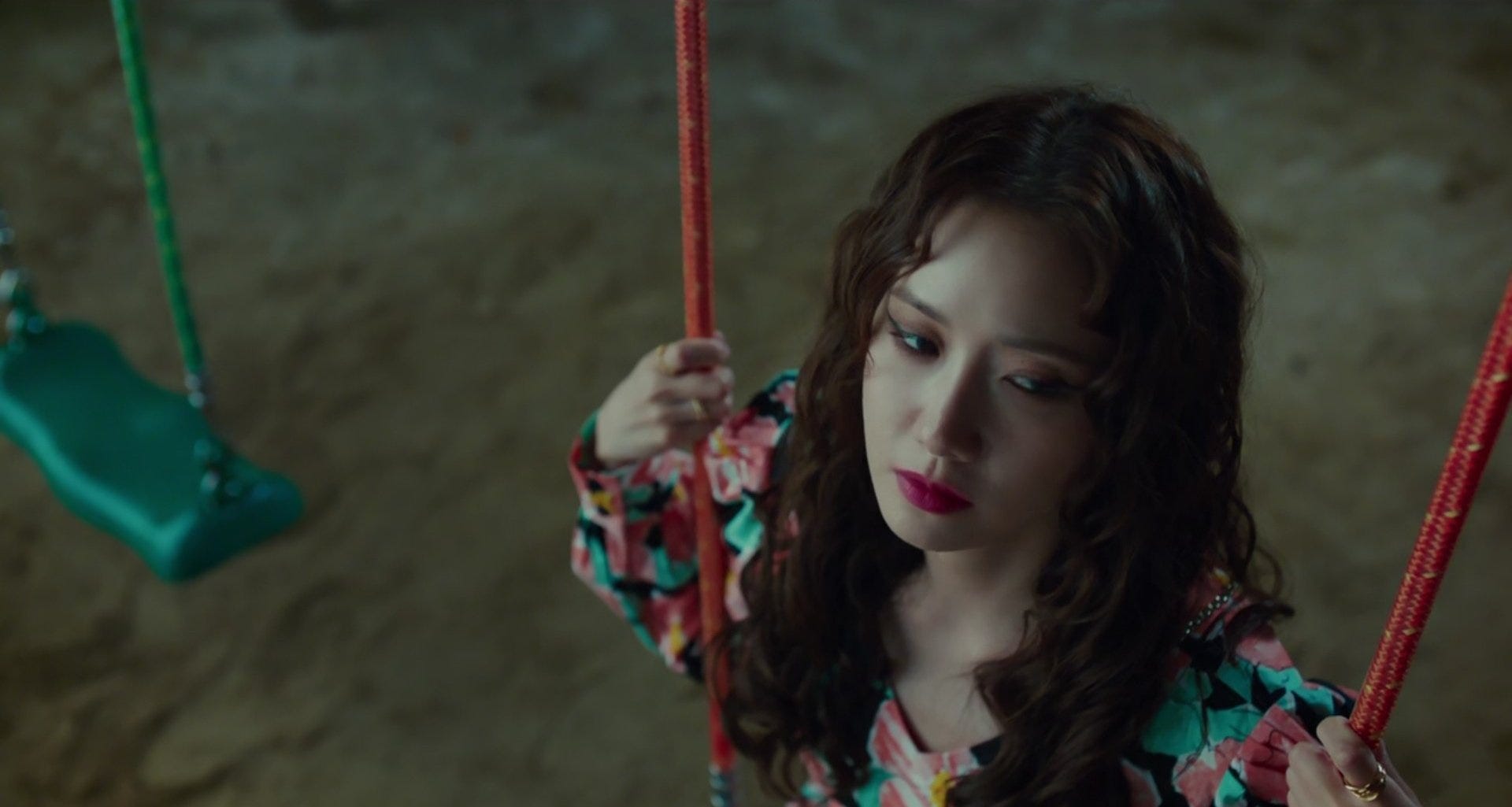
Pretty Crazy (Lee Sang-geun, South Korea)
The precedents are clear. The guiding spirt is My Sassy Girl, the 2001 classic starring Jun Ji-hyun in an incredible performance that leaves behind all notions of taste and moderation to overtake the viewer. But Pretty Crazy is much more modulated. Yoona, of Girls’ Generation fame, is committed to the game but the film defangs the situation a bit too much - it’s clear there’s a tragic backstory regarding the “demon” that has possessed Yoona. There are traumas to resolve! And yet the tone, even in the most saccharine moments, is fairly light. The film moves from hijinks to sorrow but never quite commits to full melodrama. I was reminded somewhat of the genre hybrid work of something like Malvada but in the end the film is just not as funny as one would hope. Regardless, Yoona is another Girls’ Generation member, like Seohyun, who is proving herself to be a talented actress (her biggest showcases have arguably been in the world of television, in works such as King the Land and Bon Appétit, Your Majesty).
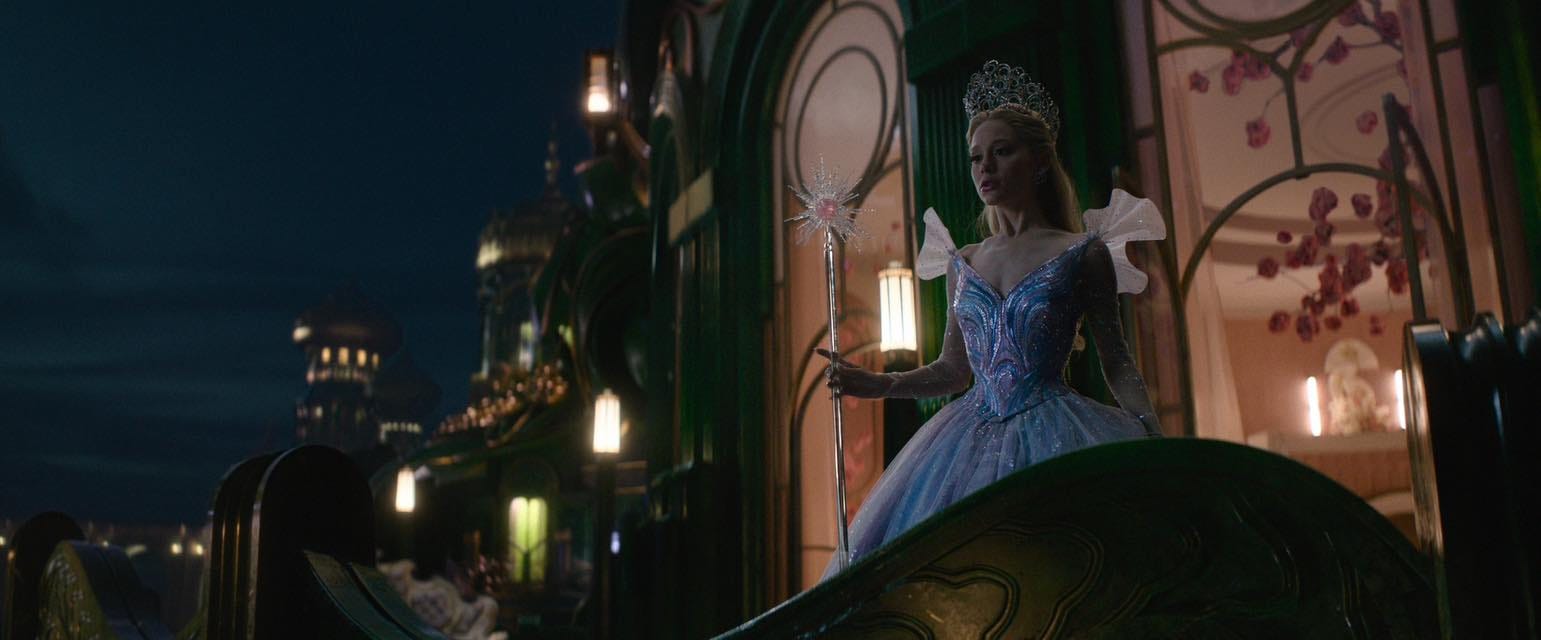
Wicked: For Good (Jon M. Chu, USA)
Take it from me who never saw the first Wicked but was once a Jon M. Chu auteurist - this is ghastly. I have no specific relationship with The Wizard of Oz (it’s fine), but the way this film inserts itself and moves around the beats of that film just reminds me that nothing in Wicked is as vibrant as the red hair of Judy Garland, nor contains the poetry found in her voice. In a number like “If I Only Had a Brain,” there’s a sense of performance, a sense of capturing an actor as they move around a space. There’s movement, there’s color, there’s character. In Wicked Chu has spectacle and special effects and resources, but there’s nothing to show. He’s simply defeated by everything that gets between him and his actors. I’m told that the first Wicked has maybe a lighter spirit and captures better what he’s about. Perhaps that’s right, but there’s nothing to redeem the flatly lit and staged scenes here. How many times in the 130 minutes of Wicked: For Good did I wish I was watching any random number from Step Up 3D? Take your pick - the “Fancy Footwork” montage, the “water dance,” or the simple beauty of Moose and Camille dancing on the street. What is the answer to this conundrum? How to film these expensive sets and integrate the complex VFX workflow into something that still respects the actors and what they bring? These are the things I thought about. I have no answers.
Text by Jhon Hernandez